10 Mistakes First-Time Café Owners Make in India – And How to Avoid Every Single One
The honest guide to starting a café in India – from someone who has seen what goes wrong.
Every week, someone drops us a message with a version of the same dream: they want to open a café in India.
Some have a location in mind. Some have a mood board. Some have already signed a lease and are only now starting to think about the real work. Very few have run the numbers properly. Almost none have thought about what happens in month four when the opening buzz fades and the daily grind of operations begins.
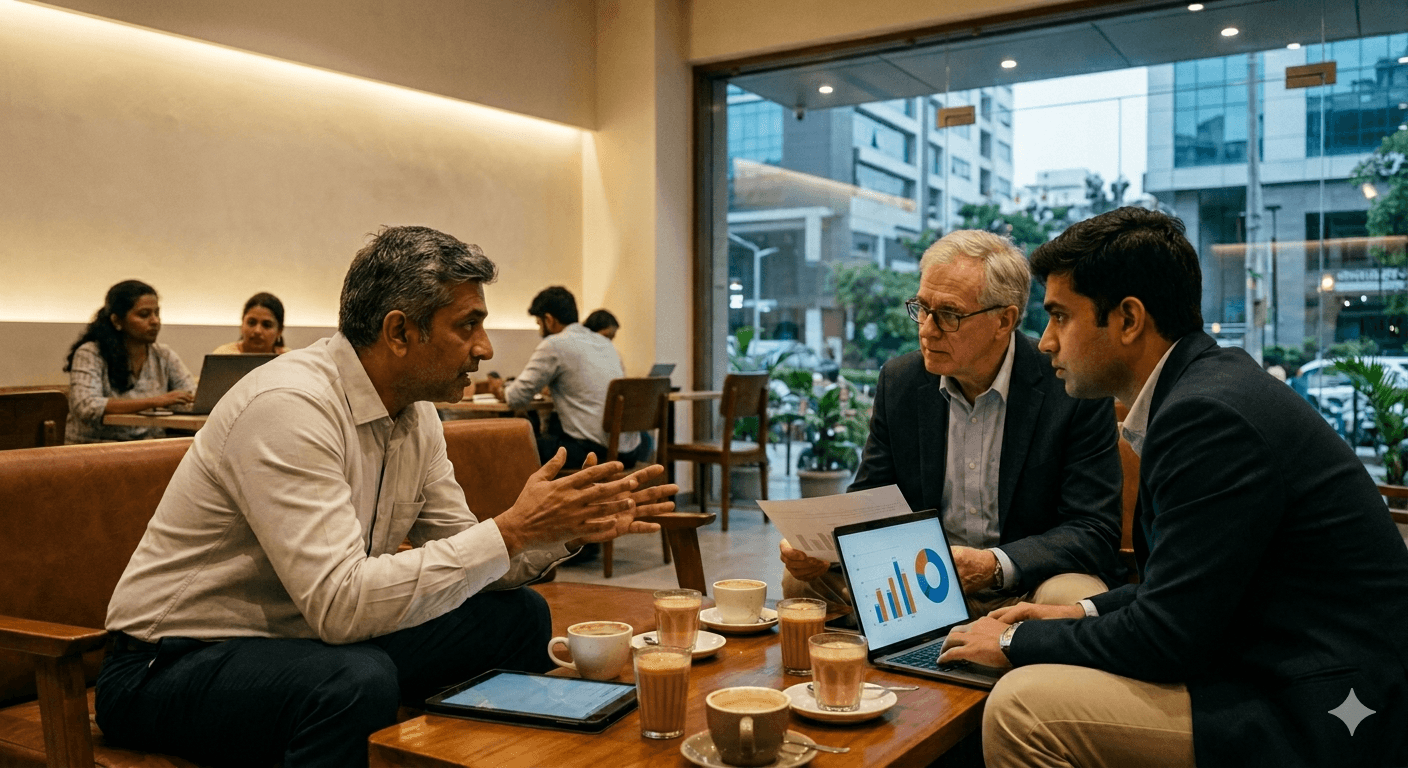
I started Westend Coffee in Bengaluru and have spent years building it from a single café into a franchise operation, a consulting practice, a barista academy, and a commercial espresso machine brand. Along the way, I have watched dozens of cafés open – and many of them close. The same mistakes surface, again and again, across cities, budgets, and concepts.
If you are researching how to start a café in India, this article is the most honest thing I can offer you – actual mistakes I have seen café owners make with real money and real consequences, and exactly how to avoid them.
“The cafés that survive in India are not the ones with the best coffee. They are the ones with the fewest unforced errors in the first 12 months.”
Falling in Love with the Aesthetic Before Running the Numbers
This is the most common café business mistake in India, and it is the most expensive. The vision arrives fully formed: warm lights, an Instagram-worthy bar, a queue of customers on opening morning. The spreadsheet never quite materialises with the same clarity.
Here is what the numbers actually look like for a 600 sq ft café in an urban Indian city in 2026:
- Fit-out and interior: ₹8–25 lakh depending on quality of finish
- Coffee equipment (machine + grinder): ₹3–15 lakh
- Furniture and fixtures: ₹2–8 lakh
- Security deposit (3–6 months rent): ₹1.5–6 lakh
- Licences and legal fees: ₹50,000–1.5 lakh
- Initial inventory: ₹1–2.5 lakh
- Branding, menu design, marketing: ₹50,000–2 lakh
- Working capital for 3–6 months: ₹3–6 lakh
- Contingency (always add 10–15%): ₹2–5 lakh
Total realistic investment: ₹25 lakh to ₹70 lakh. Not ₹8 lakh. Anyone quoting you sub-₹15 lakh for a credible urban café fit-out is either talking about a kiosk or leaving out significant cost items.
Build a detailed cost model before signing anything. Include every line item above, add 15% contingency, and ensure you have working capital for at least 6 months of operating expenses before break-even.
Creating a “rough estimate” based on what you hope it will cost, then signing a lease and fitting out before the actual costs become clear.
Choosing Location Based on Vibe, Not Data
“The space had such a good feeling” is not a location strategy. A mediocre café in a high-footfall location will outlast an exceptional café in a quiet street almost every time.
What café owners consistently underestimate when figuring out how to start a café in India: the difference between a location that looks busy and one that is busy at the times and with the demographics you actually need.
The practical way to evaluate a location: visit at 8am, 1pm, and 7pm on both a weekday and a weekend. Count footfall. Talk to neighbouring businesses. Check parking. Map competition within a 500m radius.
Spend 2–4 weeks on data-led location evaluation before committing to any lease. Foot traffic counts, demographic research, competitive mapping, and a rent-to-revenue sanity check are non-negotiable.
Choosing a location because it “feels right” or is near your home – without any footfall data or competitive analysis.
Starting the Licence Process Too Late
This mistake costs café owners months of delay and real penalties. At a minimum, opening a café in India requires:
- FSSAI Licence – apply via FoSCoS portal (State Licence for ₹12L–₹20Cr turnover)
- GST Registration – mandatory once turnover exceeds ₹20 lakh
- Shop & Establishment Licence – from local municipal corporation
- Trade Licence – from local civic body (BBMP, BMC, MCGM etc.)
- Fire Safety NOC – from the fire department after premises inspection
- Eating House Licence – required in Karnataka, Maharashtra and several other states
- Music Licences – PPL + IPRS if you play recorded music
- Signage Licence – for any outdoor hoarding or façade branding
Getting the full set in place takes 2–4 months if you start early. Start after your fit-out is complete and you are burning rent, salaries, and working capital while you wait to legally open.
Engage a local F&B licensing consultant (budget ₹30,000–₹80,000) from day one. File FSSAI and GST applications the same week you finalise your location. Run licencing in parallel with your fit-out – never after it.
Assuming licences are a “quick admin task” to handle once the café is ready. This is the #1 cause of opening day delays for first-time café owners in India.
Underestimating Working Capital Requirements
This is the mistake that kills cafés that should have survived. The café is good. The location is reasonable. The team is decent. But by month four or five, the cash runs out.
Most cafés in India take 4–8 months to reach operational break-even. In high-rent metro locations, it can take 12 months. This is the normal curve of building a customer base – not a sign of failure.
The formula: calculate your total monthly fixed costs (rent, staff, utilities, EMIs). Multiply by six. That is the minimum working capital reserve you should have in the bank before you open – separate from your setup investment.
“Whatever working capital you think you need – add 50% to it. Almost every café that fails, fails because it ran out of cash, not because the coffee was bad.”
Calculate 6 months of fixed operating costs and keep this as an untouchable cash reserve before opening. Build a week-by-week cash flow model for the first 12 months that accounts for a realistic revenue ramp – not an optimistic one.
Opening with just enough cash to cover fit-out and a month or two of operations, then discovering that month 4 revenue still does not cover fixed costs.
Skipping Proper Barista Training
I have seen beautiful, expensive espresso machines pulling mediocre shots because nobody on the team was trained to calibrate them properly. And I have watched modest equipment in the hands of a skilled barista produce exceptional coffee every single service.
Barista training is not a nice-to-have. It is a fundamental operational investment. Investing ₹20,000–₹40,000 in training your core team before opening pays for itself in the first month of consistent quality.
Budget for Foundation Level barista certification for your head barista before opening. Establish calibration SOPs for your specific machine and beans. Run a minimum 2-week practice period before your soft launch.
Hiring staff who “have some coffee experience” and assuming they can figure out your specific machine, beans, and recipes on the job during paying service.
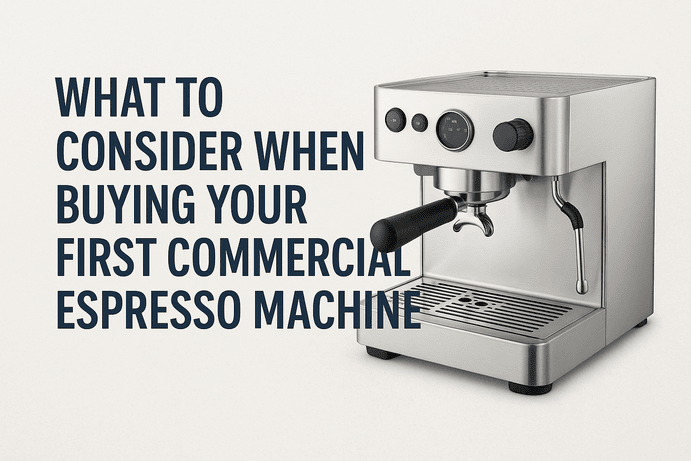
Buying the Wrong Espresso Machine
Equipment decisions are permanent in the short-to-medium term. The most common café business mistake in India on the equipment front: choosing on brand prestige rather than technical suitability and service infrastructure.
What most first-time café owners learn too late: a ₹15 lakh imported European machine that breaks down and requires parts from Italy – 3 to 4 week lead time – can cost you ₹2–3 lakh in lost revenue during a single repair cycle. A machine with strong local service infrastructure that needs 48 hours to repair is worth far more in operational terms.
The key questions: What is the boiler architecture? (Multi-boiler = gold standard for specialty cafés.) Does it offer pressure profiling? Who services this machine in your city, and are spare parts stocked in India?
The Brewlyn Signature – Westend Coffee’s commercial espresso machine built in collaboration with a reputed US coffee technology brand – was designed to fill exactly this gap: true multi-boiler technology and pressure profiling from ₹2.6 lakh, serviced directly by Westend Coffee’s India network.
Evaluate machines on boiler architecture, pressure profiling capability, local service infrastructure, and total 5-year cost of ownership – not just purchase price and brand name.
Buying the most prestigious brand you can afford without asking who services it in India, how long repairs take, and whether spare parts are stocked locally.
Building a Menu That Is Too Ambitious
A large menu feels like more value to the customer. In reality, it is one of the fastest ways to destroy your margins, kitchen efficiency, inventory management, and your team’s ability to execute consistently.
The cafés that understand how to start a café in India successfully keep their menus lean – typically 15–20 food items – each executed perfectly and priced correctly.
Food cost target: 28–35% of selling price. Labour cost: below 30% of revenue. If a menu item cannot hit these economics, it should not be on the menu regardless of how good it tastes.
Start with a tightly edited menu of your 15–20 strongest items. Cost every single item before you print the menu. Remove anything that cannot hit your food cost target or that your kitchen cannot execute at speed during a busy service.
Adding items because they “seem popular” at other cafés, printing a 40-item menu before your kitchen team has been tested, or including items with poor margins because customers might ask for them.
Ignoring Financial Numbers Until It Is Too Late
The most preventable café business failure in India is not a location problem or a quality problem. It is a financial visibility problem. Café owners who do not track key metrics weekly are flying blind.
The three numbers that determine whether a café survives:
- Food & beverage cost % – target below 35% of revenue
- Labour cost % – target below 30% of revenue
- Occupancy cost % – target below 20% of revenue (rent + utilities)
If these three combined exceed 80% of revenue, the café has no sustainable profit. Track them every week – not every month.
Set up a simple weekly P&L tracker from week one. Review food cost %, labour cost %, and occupancy cost % every Monday morning. Set threshold alerts – if food cost exceeds 35%, investigate immediately.
Reviewing finances monthly or less, discovering problems retroactively when cash reserves are already depleted, and assuming strong footfall means healthy margins.
Neglecting Marketing Until After Opening
“Build it and they will come” is the most expensive marketing strategy in the café business. The café owners who understand how to start a café in India successfully begin building their audience 4–6 weeks before they open.
The essential marketing stack for a new Indian café in 2026:
- Google Business Profile – set up the day you finalise your location; the highest-intent local searches you will ever receive come from here
- Zomato & Swiggy listings – even if you don’t prioritise delivery; critical for discoverability
- Instagram – post 4–5 times per week; document your journey before opening
- WhatsApp broadcast list – build from every customer from day one
- Local micro-influencers – 10K–100K followers in your city; often happy to visit for a hosted experience
Start building your audience 6 weeks before opening. Set up Google Business Profile immediately. Post construction, concept, and team content on Instagram. Plan a soft launch event for 50–100 people the week before official opening.
Opening with no social media presence, no Google listing, and no audience – then wondering why the first month’s revenue is below projection.
Trying to Do Everything Yourself
The most capable café founders I have met are also, often, the most dangerous – to their own businesses. They design the interior, negotiate the lease, hire the staff, create the menu, manage social media, handle accounting, and pull shots at the bar. For the first few months, this works.
Then it breaks. At month six, precisely when the business most needs consistent leadership, the burnout arrives.
The most valuable investment in understanding how to start a café in India is knowing which parts of the business you should not be doing yourself – and finding the right specialists: an F&B accountant, a licensing consultant, a trained head barista, an operations manager as soon as revenue supports it.
Identify the three or four things only you can do – your vision, your brand, your key relationships. Delegate or outsource everything else as soon as you can afford to. Invest in specialist support for licensing, accounting, barista training, and equipment selection from the start.
Treating every task as equally demanding of your personal attention, refusing to delegate because “nobody else will do it right”, and burning out before your café finds its rhythm.
Before you open your doors, make sure every item below is complete. This checklist is distilled from years of helping café owners across India navigate the journey from idea to opening day.
6 Months Before Opening
- Complete concept definition, business plan, and financial model with realistic projections
- Location shortlisted and evaluated with footfall data and competitive analysis
- Architect/designer brief completed – budget confirmed
- Equipment research started – machine, grinder, POS system shortlisted
4 Months Before Opening
- Lease signed – with legal review of lock-in period, escalation clause, and exit options
- FSSAI licence application filed
- GST registration initiated
- Shop and Establishment Licence application filed
- Fit-out contractor selected and work begun
- Brand identity (logo, colours, menu design) in progress
2 Months Before Opening
- All equipment ordered and delivery dates confirmed
- Fire Safety NOC inspection scheduled
- Eating House Licence application filed (state-specific)
- Music licences (PPL + IPRS) applied for
- Head barista hired – training programme enrolled
- Menu finalised, costed, and photographed
- POS system installed and integrated with delivery platforms
- Instagram account active – building audience with pre-opening content
- Google Business Profile created and fully optimised
2 Weeks Before Opening
- Soft launch conducted with 50–100 guests – feedback incorporated
- All staff trained on SOPs, menu recipes, and service standards
- Working capital reserve confirmed in bank account
- All licences in hand – physical copies on premises
Opening Week
- Daily calibration protocol established and practised
- Grand opening event planned and communicated
- Zomato, Swiggy, Google listings live with photos
- WhatsApp broadcast list ready for opening day announcement
💡 Elementor tip: Add FAQ schema markup via Yoast SEO or RankMath on this section to get Google rich snippets (FAQ accordion in search results).
What is the minimum investment to start a café in India?
For a kiosk or small takeaway format, ₹8–15 lakh is achievable. For a sit-down café of 400–600 sq ft in an urban Indian city, the realistic minimum is ₹25–35 lakh including working capital. In high-rent metro locations, budget ₹40–70 lakh for a credible dine-in concept. Anyone quoting significantly less is likely excluding key cost items.
How long does it take to open a café in India from idea to launch?
If you are doing it properly – location research, licencing, fit-out, equipment procurement, hiring, training – allow 6–10 months. Rushing this timeline is one of the most expensive café business mistakes in India. Each phase has dependencies that cannot be easily compressed without consequences.
Which licences are mandatory for a café in India?
At minimum: FSSAI licence, GST registration, Shop and Establishment Licence, Trade Licence, and Fire Safety NOC. Depending on your state: Eating House Licence. If you play music: PPL and IPRS licences. If you have outdoor signage: Signage Licence. Start all applications as early as possible – the collective timeline is 2–4 months.
How long does it take to reach break-even for a new café in India?
Most well-located, well-operated cafés reach operational break-even within 6–12 months of opening. Ensure you have working capital to cover at least 6 months of fixed costs before opening, regardless of how optimistic your revenue projections are.
Do I need a consultant to open a café in India?
Not necessarily – but an experienced F&B consultant will save you far more than their fee in avoided mistakes, faster licencing, better equipment decisions, and a more realistic financial model. If this is your first café and you have not worked in the industry before, professional guidance on at least the licencing and equipment selection stages is strongly recommended.
What espresso machine should I buy for my first café in India?
This depends on your volume, your team’s skill level, and your budget. For a specialty café, prioritise multi-boiler architecture and local service infrastructure over brand prestige. Our full machine comparison guide covers every major option available in India in 2026, honestly and in detail.
→ Best Commercial Espresso Machines in India (2026) – Full Guide
Start Smart. Build Right. ☕
Opening a café in India in 2026 is one of the most exciting entrepreneurial ventures available – and one of the most demanding. The market is genuinely growing, specialty coffee culture is maturing rapidly, and there has never been a better time to build something meaningful in this space.
But the cafés that survive and thrive are not the ones with the biggest budgets or the most beautiful fit-outs. They are the ones that avoided the unforced errors – accurate financial models, data-based location decisions, early licencing, invested teams, and weekly number tracking from day one.
Every one of the ten café business mistakes in India above has cost someone real money. None of them are inevitable. With the right preparation, every single one is avoidable.
→ How to Open a Café in India – Our Complete Step-by-Step Guide → Book a Café Consultation – Westend Coffee → Westend Coffee Academy – Barista Training → Brewlyn Signature Commercial Espresso Machine